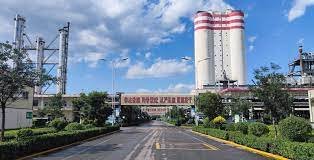
Fertilizers are essential for modern agriculture, and among the many production methods available today, high tower granulation stands out as a superior technology for producing high-quality NPK (Nitrogen, Phosphorus, Potassium) fertilizers. If you’ve ever wondered how those balanced, nutrient-rich granules are made, you’re in the right place. This article dives deep into NPK Granulation Technology Explained, focusing on high tower fertilizer plants and the advantages they offer to large-scale production. We’ll also highlight Cementl, a brand known for supplying top-grade equipment for every stage of building and operating an NPK fertilizer plant.
What is High Tower Granulation?
High tower granulation is a process used in the manufacturing of compound fertilizers, especially NPK fertilizers. In this method, melted raw materials are sprayed from the top of a tall tower—often over 100 meters in height—and as the droplets fall, they cool and solidify into uniform granules. This vertical structure allows for a natural cooling process, which not only improves product quality but also reduces energy consumption.
The result? Highly uniform, round granules with excellent storage and transport properties. It’s a clean and efficient production method that’s rapidly gaining traction worldwide, particularly in regions focusing on sustainable agriculture.
NPK Granulation Technology Explained
Let’s break down NPK Granulation Technology Explained in the context of a high tower process:
- Raw Material Melting: Urea, ammonium phosphate, and potassium chloride (or sulfate) are melted in high-temperature reactors. This molten mixture forms the base of the NPK compound.
- Slurry Formulation: The molten materials are blended into a slurry, adjusted for the exact nutrient ratios needed for the final fertilizer product.
- Spray Granulation: This slurry is then pumped to the top of the high tower. As it is sprayed downward, gravity and natural air currents help it cool and solidify into granules.
- Granule Conditioning: The granules are collected at the bottom, then cooled further, screened for size uniformity, and coated to prevent clumping.
- Final Packaging: The finished NPK granules are bagged and shipped out to farms around the world.
This method is highly automated and produces minimal dust, making it one of the cleanest and most efficient methods available in the industry.
Why Choose a High Tower NPK Fertilizer Plant?
So, what makes a high tower NPK fertilizer plant so valuable for modern agriculture and industry? Here are a few key advantages:
- Energy Efficiency: The vertical design allows natural air cooling during the granulation process, significantly reducing energy consumption.
- Environmental Benefits: Compared to traditional rotary drum granulation, the high tower method emits fewer pollutants and has a lower carbon footprint.
- Product Quality: The granules formed are highly spherical, dust-free, and have superior flowability—ideal for mechanized spreading in large agricultural fields.
- Automation & Scale: High tower systems are fully automated and suitable for producing large quantities, making them a perfect fit for commercial fertilizer producers.
Brands like Cementl have developed innovative designs and modular systems for high tower granulation, helping clients build efficient NPK fertilizer plants that meet both environmental and production standards. Whether you’re starting from scratch or upgrading an existing facility, Cementl offers scalable solutions that are cost-effective and future-ready.
Cementl: A Trusted Name in NPK Fertilizer Plant Equipment
When investing in an NPK fertilizer plant, choosing the right supplier for machinery and plant design is critical. That’s where Cementl comes in. Although known for their expertise in cement and heavy industrial plants, Cementl has also expanded into the fertilizer equipment industry, offering reliable, cutting-edge solutions for high tower NPK production.
Their systems feature:
- Corrosion-resistant components for handling aggressive chemical environments
- Automated control panels for precise nutrient balancing
- Energy-saving designs that optimize material usage and heat transfer
With Cementl, clients receive end-to-end support—from feasibility studies and plant design to installation and maintenance. Their machines are built for longevity and peak performance, ensuring that your fertilizer plant operates smoothly for years to come.
Conclusion
In today’s agriculture-driven economy, efficiency, sustainability, and product quality are more important than ever. High tower granulation represents a cutting-edge approach to fertilizer production, offering a streamlined, eco-friendly method of producing NPK compounds that meet the needs of both farmers and the environment.
This article not only has NPK Granulation Technology Explained in simple terms but also introduced you to the benefits of using a high tower NPK fertilizer plant. With top-tier brands like Cementl providing the backbone of your operation, transitioning to or investing in high tower technology is a decision that pays off in long-term productivity and quality assurance.